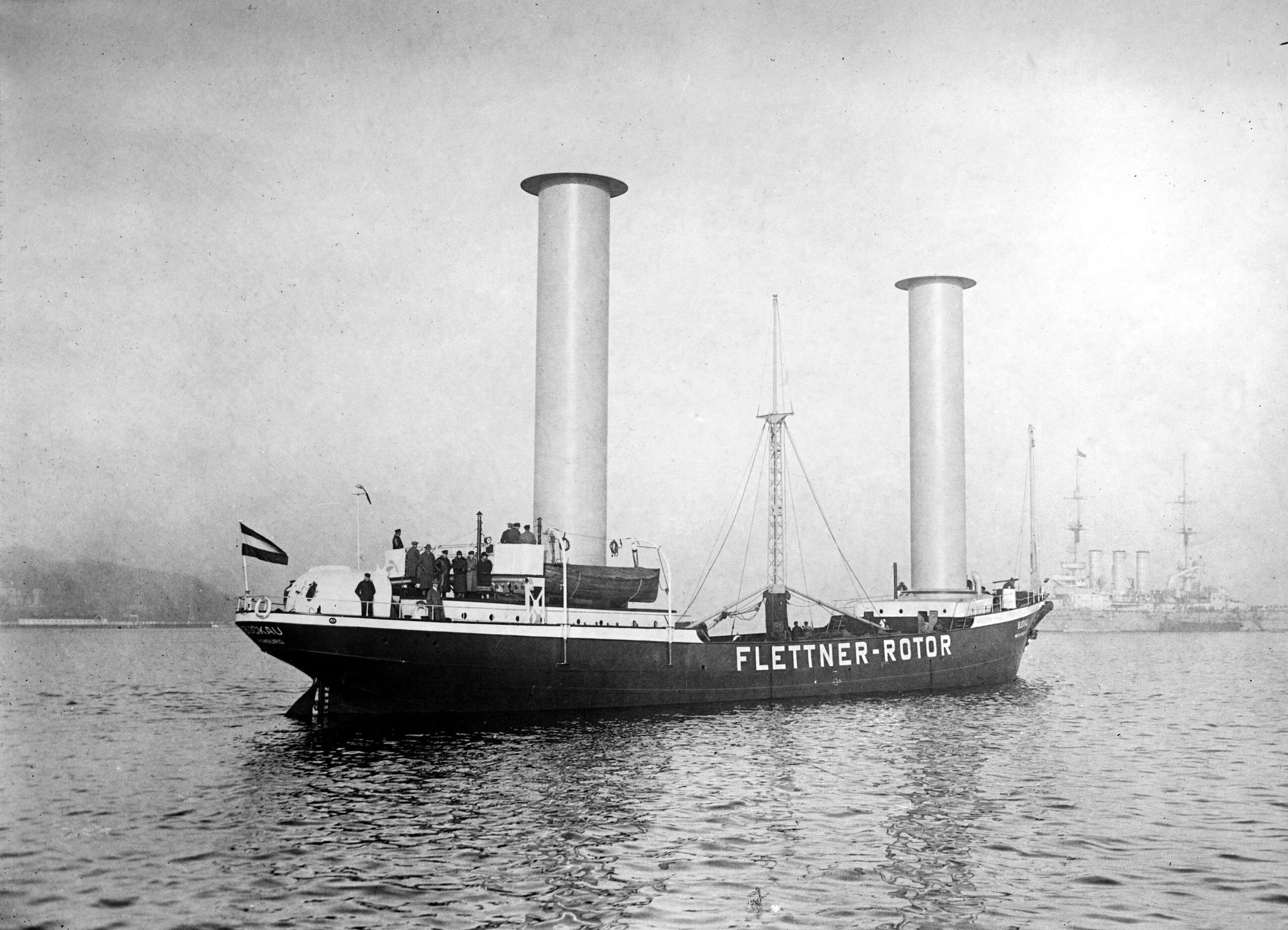
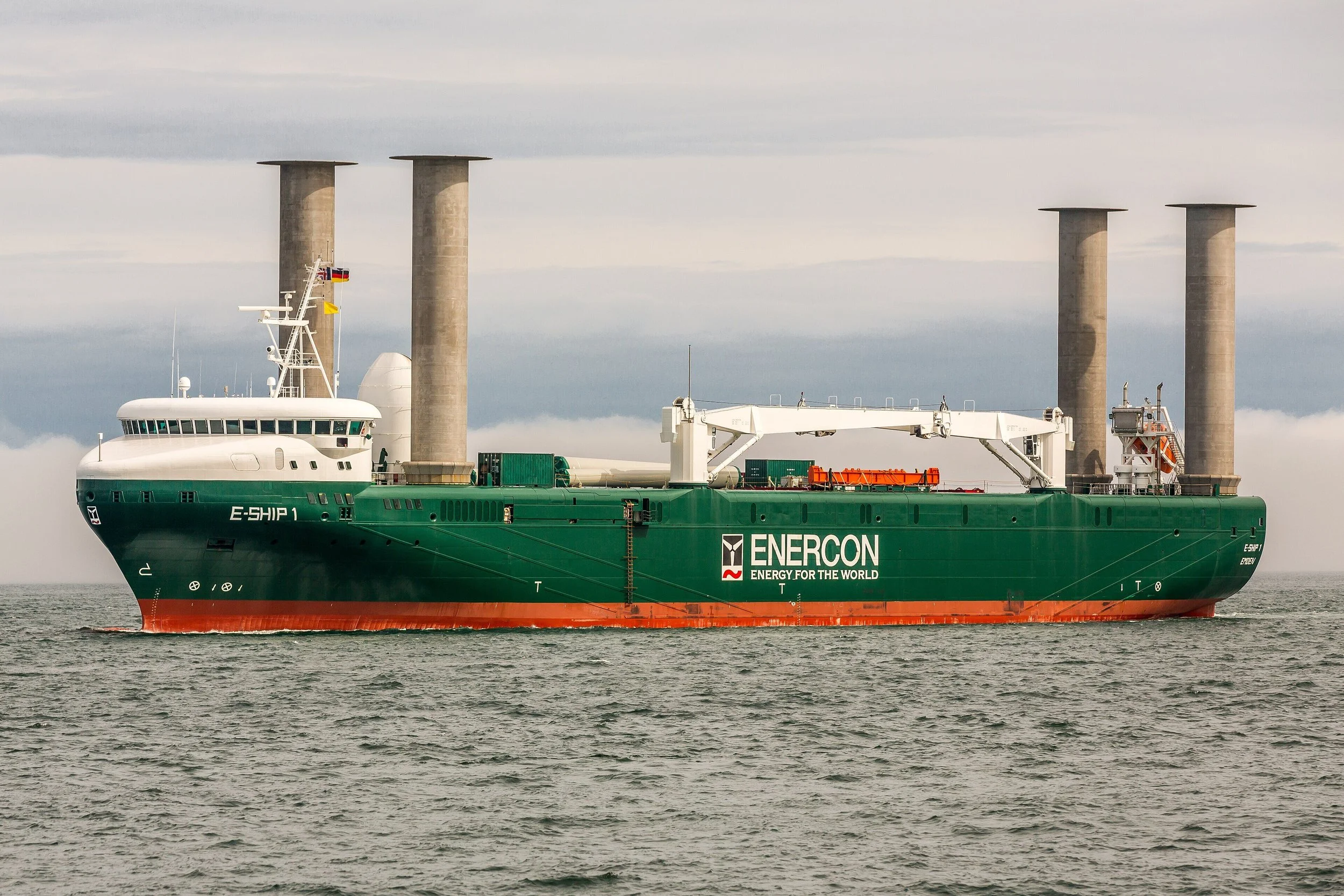
Wind propulsion is returning to commercial shipping. More than 100 commercial vessels now sail with wind-assist systems installed, and the fleet is roughly doubling each year. However, a sail is not a bolt-on accessory. Adding tall, heavily loaded structures to a vessel's deck affects its stability, structure, visibility, cargo operations and class approval — and the fuel a sail saves depends on the ship, the route and the weather it actually sees.
Shipwright recognizes that such a system is more than the simple sum of its parts. An effective wind-assisted propulsion system must be designed with the vessel, the sail and their interactions taken into account.
Performance Prediction
Computational Fluid Dynamics (CFD) is a powerful tool for predicting the forces a sail produces and how those forces act on the hull. Sail thrust comes with side force and heeling moment, which the hull and rudder must resist; multiple sails interact with one another and with the ship's superstructure.
Shipwright utilizes in-house CFD software to model sail–hull interaction and predict propulsion power, drift and heel, and combines those results with route wind statistics to estimate the fuel savings a specific vessel can expect on a specific trade.
Stability & Structural Integration
Sails add significant mass high above the deck and introduce a new wind-heeling load. Intact and damage stability must be re-examined for every installation. The deck foundations and under-deck structure must be designed to carry large, cyclic sail loads for the life of the vessel, without interfering with hatches, cranes or cargo operations.
Regulatory & Class Approval
A type-approved sail does not remove the need for ship-specific approval. Shipwright prepares the integration package required by class and flag — stability, structure, bridge visibility and navigation-light arrangements, storm lock-down and safety provisions — under the applicable rules, including the ABS requirements for wind-assisted propulsion installations and DNV ST-0511.
Shipwright’s engineers and project managers have the ability to take a wind-assisted propulsion system from early concept design to completed installation using in-house resources — an efficient design process with reduced cost and product delivery time for our clients.
Project Management
Shipwright has extensive experience in project management for exhaust scrubber installations, ECA fuel conversions and ballast water treatment systems on vessels in service. This expertise can be applied to WASP installations to ensure a smooth and efficient transition from concept to operation — whether the sail is fitted at a planned drydocking or designed into a newbuild.
Choosing the Right Technology
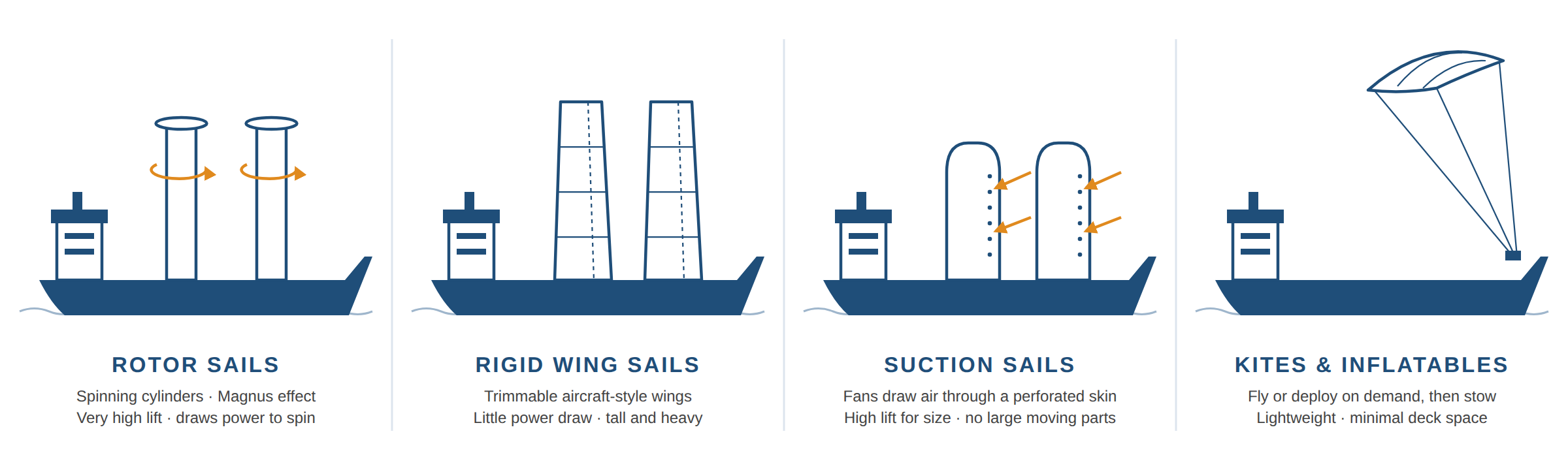
No single technology is best for every ship. Deck space, air draft, cargo handling, port calls and the winds on the vessel's route all determine which system — if any — will pay for itself.
ROTOR SAILS
Rotating cylinders that use the Magnus effect to generate very high lift from a compact footprint. The most proven technology in service today, but they draw electrical power to spin.
RIGID WING SAILS
Large, aircraft-style wings that can be trimmed to the wind. They generate thrust with little or no power draw, but they are tall and heavy and must be lowered for bridges and cargo operations.
SUCTION SAILS
Thick wings with fans that draw air through a perforated skin, keeping the flow attached and producing high lift for their size with modest power draw and no large moving external parts.
KITES & INFLATABLE SAILS
Lightweight systems that fly or deploy on demand and stow away when not in use, suited to vessels with limited deck space.
Optimizing the Entire System
THE WIND IS FREE Every kilowatt of thrust delivered by the wind is a kilowatt the main engine doesn't have to produce. Verified retrofits typically save 5–25% of propulsion fuel, with larger savings reported for multi-sail installations on favorable routes. Reducing fuel consumption reduces the cost to operate the vessel — and, increasingly, the cost of its carbon emissions.
THE COST OF CARRYING A SAIL A sail is not free to carry. Rotors and suction fans consume power. Every sail adds weight, windage and drift, requires additional rudder angle, and may cost cargo capacity or port time. If the penalties outweigh the thrust on a vessel's actual routes, the system isn't useful.
OPTIMIZING THE NET SAVINGS The net saving is simply the fuel saved by the sails, minus the fuel spent to carry and operate them. Sail type, number, size and position, together with how the vessel is routed and operated, determine where that optimum lies. The largest sail is not necessarily the best one.
Why Now
Regulation is turning fuel savings into compliance value. The EU Emissions Trading System now charges for CO₂ emitted on EU voyages, and FuelEU Maritime includes a specific reward for vessels that use wind propulsion. Under the IMO's EEXI and CII regimes, wind-assist contributes directly to a vessel's efficiency rating — a fuel saving of around 15% can be enough to improve a CII rating by a full band. With carbon costs included, typical paybacks fall in the three-to-six-year range.
Most of the engineering capacity behind today's installations is based in Europe. Shipwright brings wind-assisted propulsion engineering to U.S.-flag and U.S.-based owners, operators and technology developers — from the first feasibility study through class approval and installation.